保存内容の差分
https://www.theatlantic.com/family/2026/08/parenting-advice-education-income/688138
変更ブロック
0
追加行
0
削除行
0
変更前
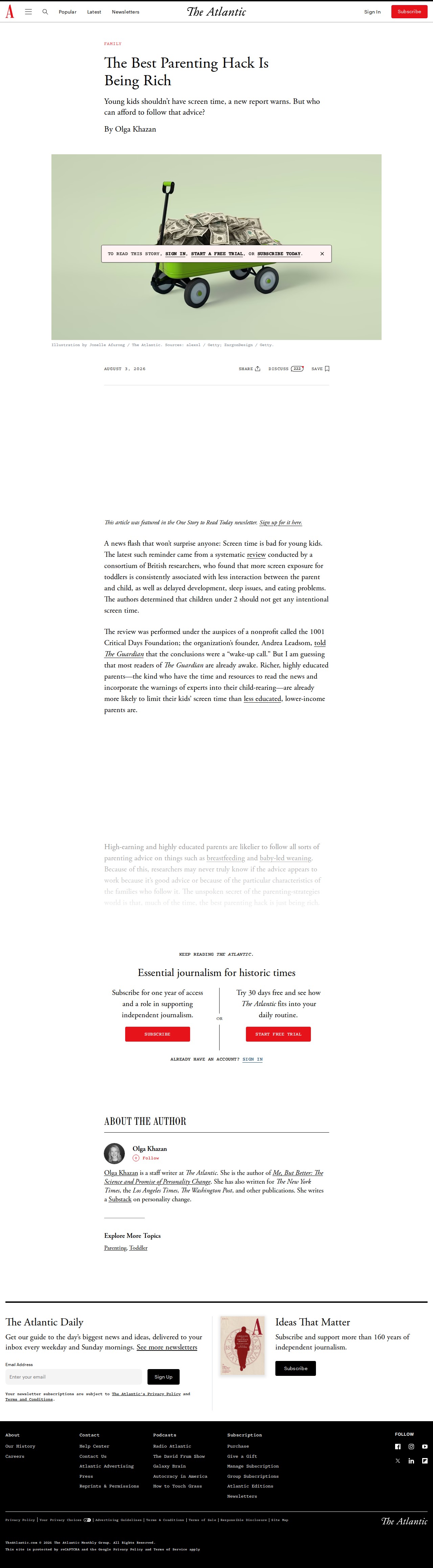
This page discusses how wealth and education significantly influence parenting practices, particularly regarding screen time for young children. A review by British researchers highlights the negative impacts of screen exposure on toddlers, advocating for no screen time for those under two. However, wealthier and highly educated parents are better positioned to adhere to such advice, as they typically possess the resources and knowledge to implement expert recommendations. The article argues that many parenting outcomes may stem from socioeconomic factors rather than the advice itself, suggesting that being affluent is often the most effective 'parenting hack'.
変更後
This page discusses the correlation between wealth and effective parenting strategies, emphasizing that richer, highly educated parents are better positioned to implement expert parenting advice, like limiting screen time for children. A recent report indicates that increased screen time negatively impacts parent-child interactions and child development. The findings suggest that those with financial means and education are more likely to adhere to such guidelines, raising questions about the true effectiveness of parenting advice when socio-economic factors are involved. Ultimately, the article posits that being wealthy may be one of the most significant advantages in successful parenting.
前回のスクリーンショット
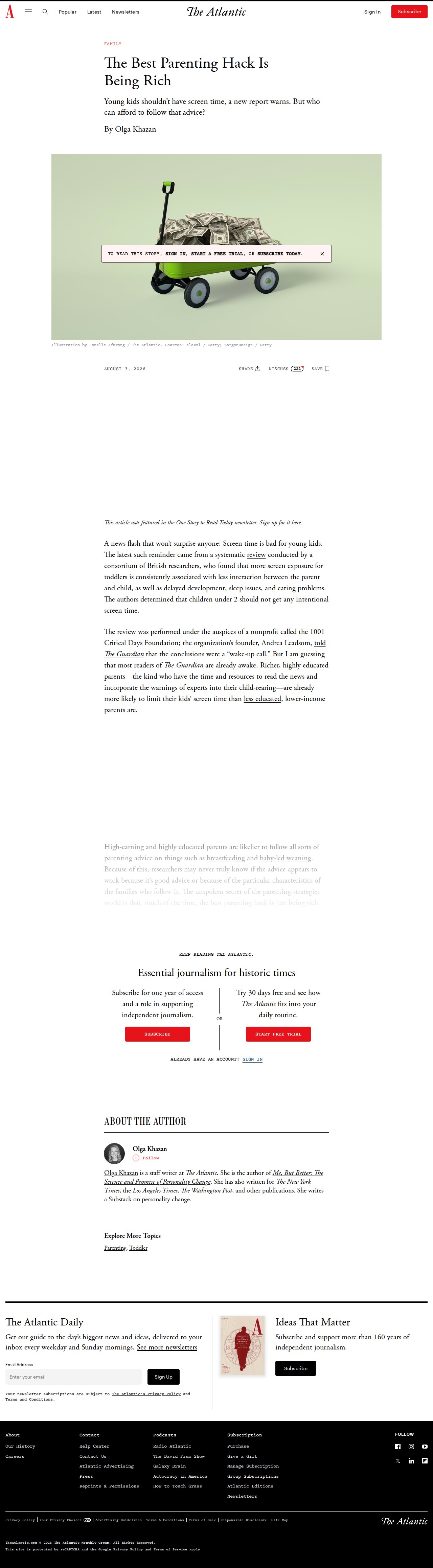
今回のスクリーンショット