CBの価格(パリティと乖離率) | 概要(CB) | 日本取引所グループ
https://www.jpx.co.jp/equities/products/cb/outline/01.htmlThe evidence pack includes HTML, screenshots, summaries, and metadata. It can be downloaded on Pro.
CBの価格(パリティと乖離率) | 概要(CB) | 日本取引所グループ
Open the archived HTML with saved-time metadata attached.
This HTML has CSS and images embedded, so it can still be opened even if the original page disappears.
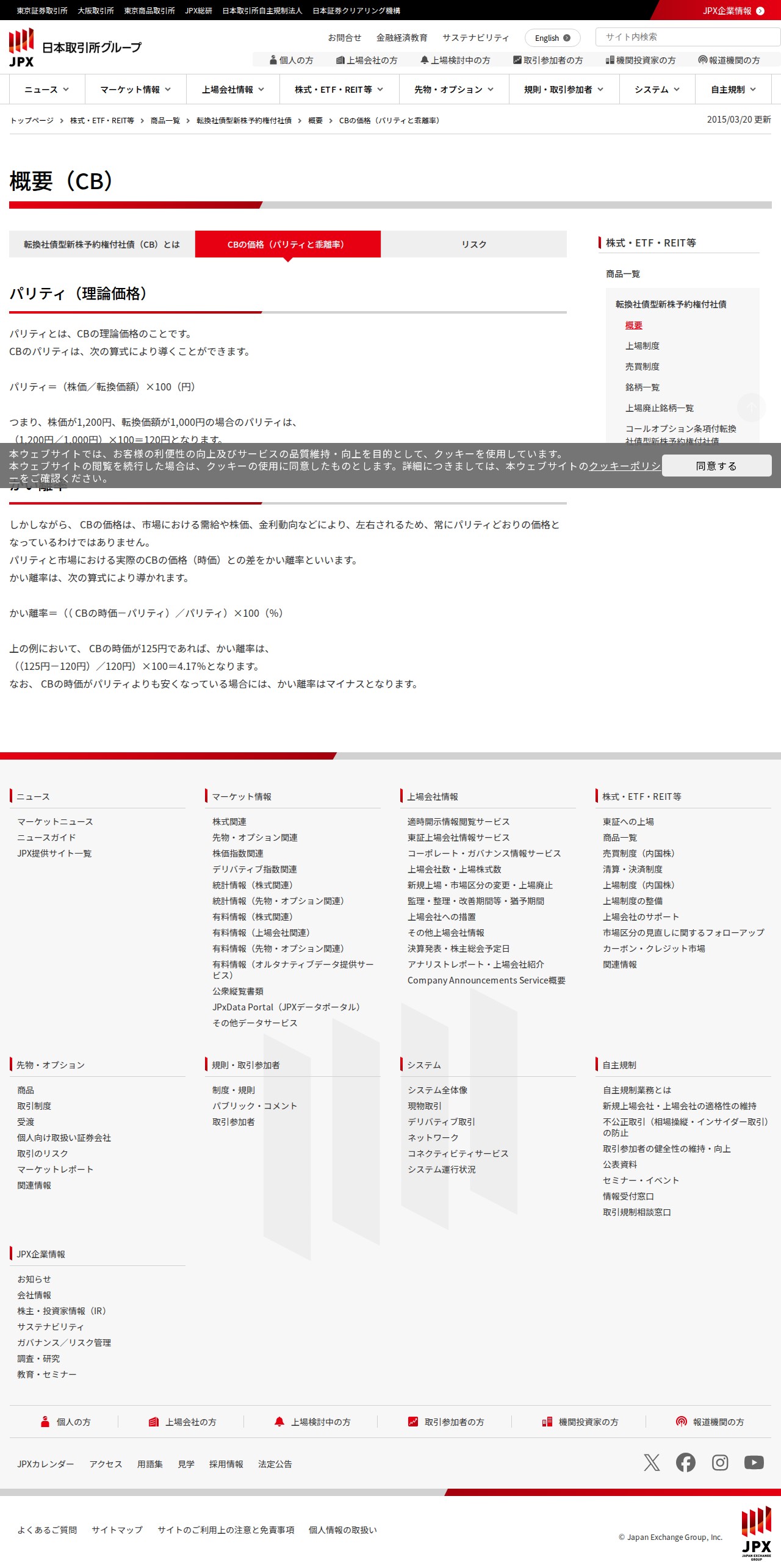
This page explains the pricing mechanism of convertible bonds (CBs) provided by the Japan Exchange Group. Parity, the theoretical price of a CB, is calculated by dividing the stock price by the conversion price and multiplying by 100. For example, if the stock price is 1,200 yen and conversion price is 1,000 yen, parity equals 120 yen. However, actual CB market prices fluctuate due to supply and demand and interest rate trends. The difference between parity and actual market price is called the divergence rate, which becomes positive when the market price exceeds parity, or negative when it falls below parity.
