Archive ready

How Rust's Ownership Model Prevents Bugs — A Visual Guide - DEV Community

https://dev.to/divyesh_kakadiya/how-rusts-ownership-model-prevents-bugs-a-visual-guide-2epp
April 1, 2026 at 05:24 PM JSTThe archive page, viewer, and downloads use this saved version.
April 1, 2026 at 05:24 PM JST·dev.to

Bundle the HTML, screenshot, summaries, and metadata into one ZIP file. Pro saves automatically start preparing the external RFC 3161 timestamp, and only unfinished records need one more preparation step before download.
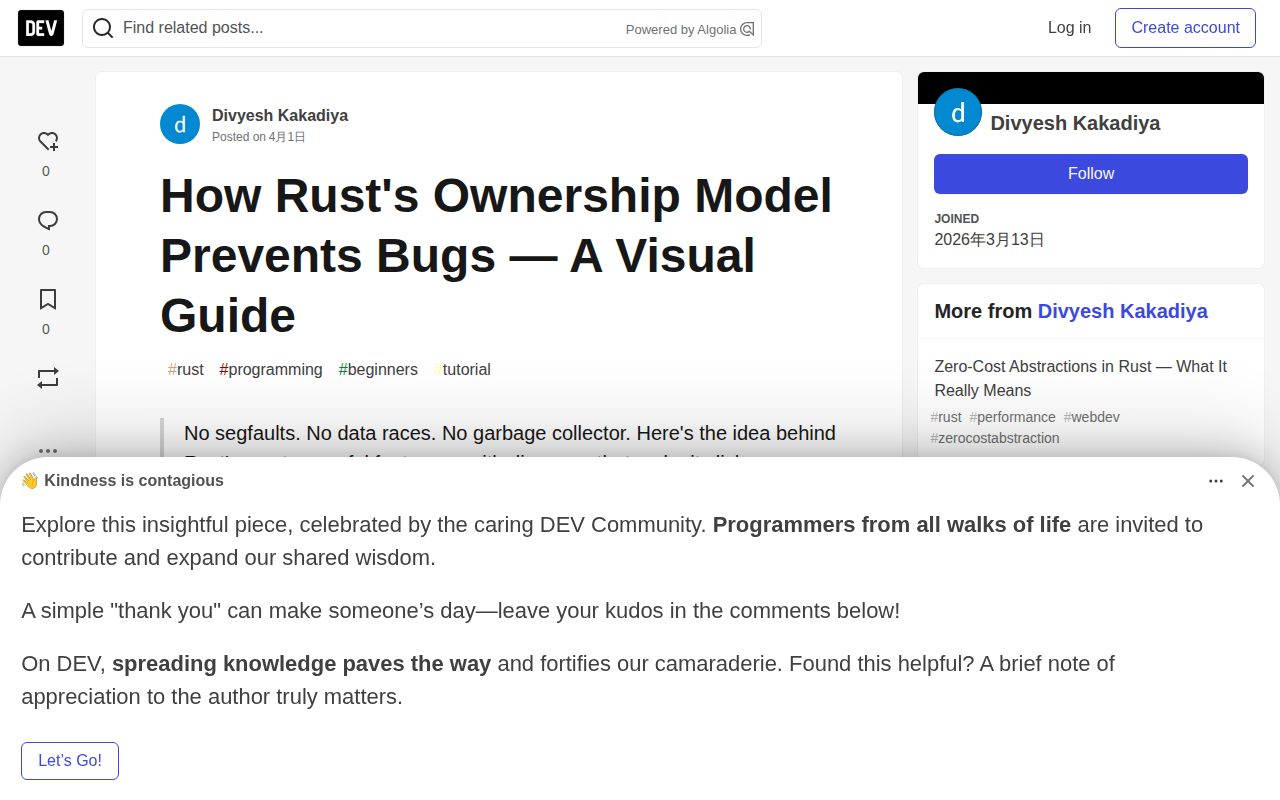
Saved page

How Rust's Ownership Model Prevents Bugs — A Visual Guide - DEV Community

Open the dedicated viewer to inspect the saved page with archive metadata pinned above it.

This is a self-contained HTML copy with CSS and images embedded, so it still renders even if the original page disappears.

The dedicated viewer keeps the original URL and saved timestamp visible while you review the archived HTML.

About this pageAI generated

This page explains Rust's ownership model, which ensures memory safety through three simple rules: One Owner, Borrow Rules, and Auto Drop. Unlike C and C++, which allow unlimited references to data, Rust prevents segmentation faults, data races, and memory leaks by making these bugs structurally impossible to write. The compiler rejects violations before execution. According to Microsoft's Security Response Center, approximately 70% of annual CVEs are memory safety issues. Rust achieves memory safety without a garbage collector by enforcing strict compiler checks on ownership patterns, preventing silent data corruption and security vulnerabilities.

How Rust's Ownership Model Prevents Bugs — A Visual Guide - DEV Community - Saved screenshot

The full page can be captured up to 15,000px in height so you can review the complete page layout when needed.